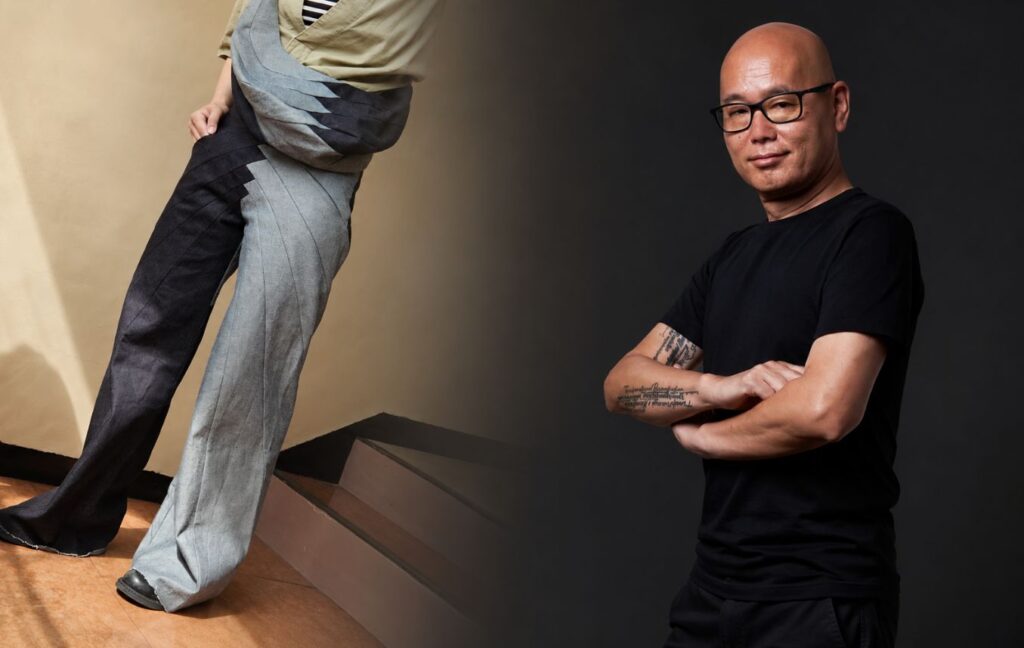
Shingo Sato and the Art of Transformational Reconstruction
Fashion design is often taught through patterns, measurements, and construction rules. Shingo Sato approaches it differently.
Instead of treating fabric as something that follows a pattern, he treats it as a living medium that can be sculpted, twisted, folded, and transformed into entirely new forms.
For many designers, the first time they see his work feels almost impossible. Seams flow across garments like rivers. Shapes emerge where no pattern pieces seem to exist.
Then comes the realisation.
There is a method behind the magic.
And that method has changed the way fashion designers, pattern makers, and couture artisans think about garment creation.
Who Is Shingo Sato
Shingo Sato is internationally recognised for developing Transformational Reconstruction, a revolutionary garment construction methodology that reimagines how patterns are created and manipulated.
His work combines:
- Advanced draping
- Moulage techniques
- Volume manipulation
- Origami textiles
- Creative pattern engineering
- Three-dimensional garment development
Rather than drafting patterns flat on paper first, Shingo’s process begins directly on the dress form. Fabric becomes the sketchbook.
The mannequin becomes the canvas.
The result is a design process that encourages experimentation, creativity, and technical precision all at once.
For fashion professionals who feel restricted by conventional pattern-making methods, Transformational Reconstruction offers an entirely new way of thinking.
What Is Transformational Reconstruction?
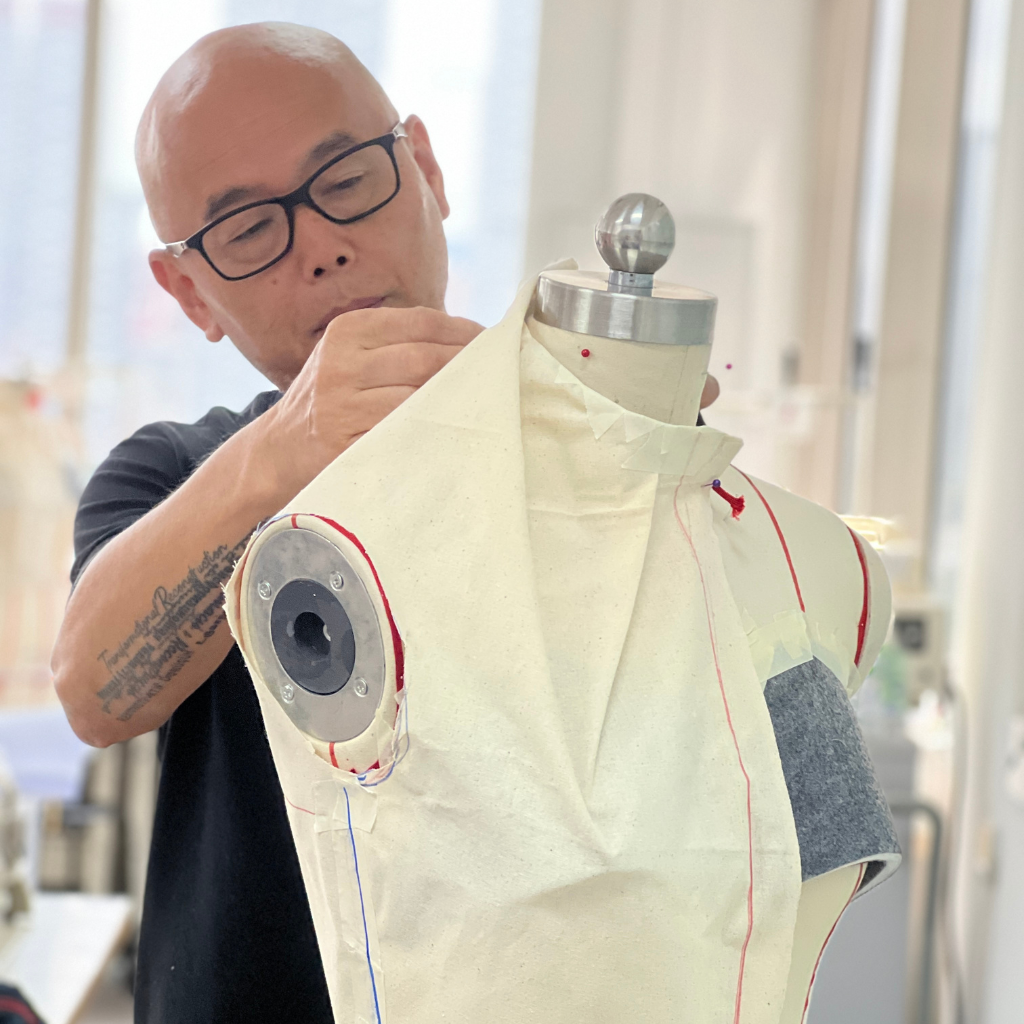
Imagine drawing directly onto a garment instead of drawing it on paper.
That’s the simplest way to understand transformational reconstruction.
The technique involves manipulating fabric directly on the dress form, creating new seam lines, volume placements, and structural transitions before translating those ideas into patterns.
Instead of asking:
“How do I make this pattern fit my design?”
You begin asking:
“What happens if I move this seam?”
“What if the fabric folds this way?”
“What if the volume starts here instead?”
This shift opens up possibilities that traditional flat pattern drafting often struggles to achieve.
Why Designers Love It?
Transformational reconstruction helps designers:
- Generate original silhouettes
- Develop unique garment structures
- Create complex forms without excessive pattern pieces
- Improve draping confidence
- Strengthen spatial awareness
- Build couture-level problem-solving skills
Many designers describe the experience as learning to see garments in three dimensions for the first time.
How Does Moulage Fit Into The Process?
Moulage sits at the heart of many advanced couture techniques.
If pattern drafting is architecture, moulage is sculpture.
The designer works directly on the form, shaping fabric around the body to discover proportions, balance, and structure.
This approach allows designers to:
- Understand how fabric behaves naturally
- Explore unconventional silhouettes
- Refine fit with greater precision
- Develop more intuitive design solutions
For fashion educators and industry professionals, moulage also creates a stronger bridge between technical construction and creative development.
Why Are Origami Textiles Becoming More Important?
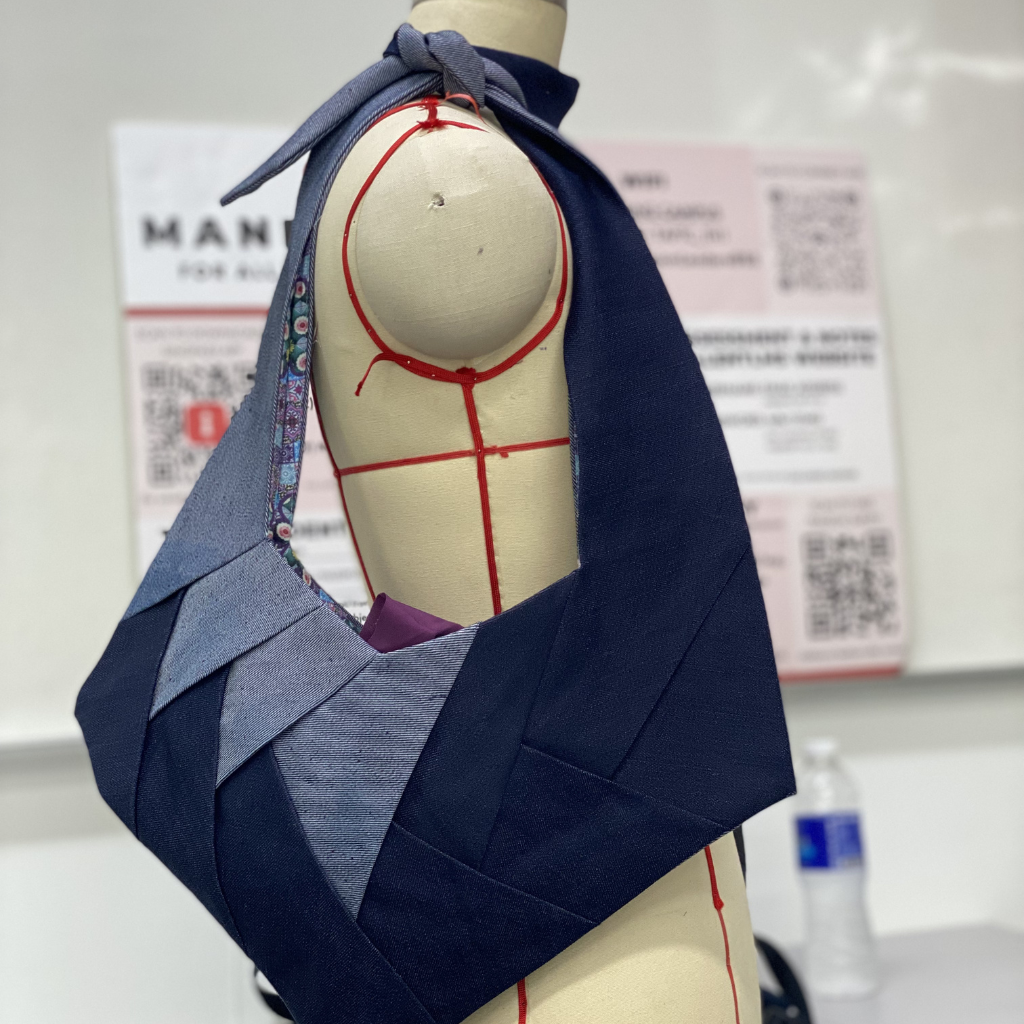
Fashion is moving beyond simple garment construction. Consumers increasingly appreciate craftsmanship, innovation, and visual storytelling. Origami textiles offer all three. Inspired by folding principles found in traditional paper art, these techniques create dynamic surfaces, structural depth, and unexpected movement within garments and accessories.
When combined with transformational reconstruction, origami-inspired methods can create:
- Architectural silhouettes
- Sculptural garments
- Innovative accessories
- Couture-level design details
More importantly, they help designers develop a distinctive creative signature. In a competitive industry, that matters.
Your Transformational Reconstruction Practice Guide
If you’re exploring transformational reconstruction for the first time, start by documenting your draping experiments.
Create a journal that tracks:
- Fabric choices
- Seam placements
- Volume experiments
- Pattern outcomes
- Construction challenges
Many experienced designers use this practice to accelerate skill development and build a valuable archive of design solutions.
Interested in seeing these techniques applied in a professional workshop setting?
Explore Tembusu Institute’s upcoming Shingo Sato masterclasses and discover how advanced draping methods can transform your design process.
What Makes Volume Manipulation So Powerful?
Volume manipulation is where technical skill meets artistic expression. A slight shift in fabric distribution can completely change how a garment feels and moves.
Think about the difference between:
- A structured jacket
- A sculptural dress
- A fluid draped blouse
The fabric may be similar. The volume strategy is not.
Mastering volume manipulation allows designers to:
- Create stronger silhouettes
- Improve garment balance
- Introduce movement
- Enhance visual impact
- Solve complex design challenges
This is one reason Shingo Sato’s workshops attract experienced designers from around the world. They are not simply learning a technique. They are learning a new design language.
What Are Fabric Transitions And Why Do They Matter?
One of the most distinctive aspects of transformational reconstruction is the seamless movement between garment sections.
These fabric transitions often appear effortless. In reality, they require significant technical understanding.
Successful transitions can help designers:
- Connect multiple design elements
- Improve garment flow
- Reduce visual interruption
- Create sculptural effects
- Develop innovative seam placements
When executed well, the eye follows the garment naturally. The construction disappears.
The design takes centre stage.
How Can Fashion Professionals Apply These Skills?
The applications extend far beyond runway fashion.
Fashion professionals use transformational reconstruction in:
Haute Couture
Creating one-of-a-kind garments with exceptional craftsmanship.
Bridal Design
Developing distinctive silhouettes and couture detailing.
Fashion Education
Teaching students advanced design thinking and creative problem-solving.
Pattern Development
Improving technical innovation and pattern engineering capabilities.
Accessory Design
Creating sculptural bags and wearable art pieces.
The common thread?
Creative differentiation.
Learn Directly From Shingo Sato In Singapore
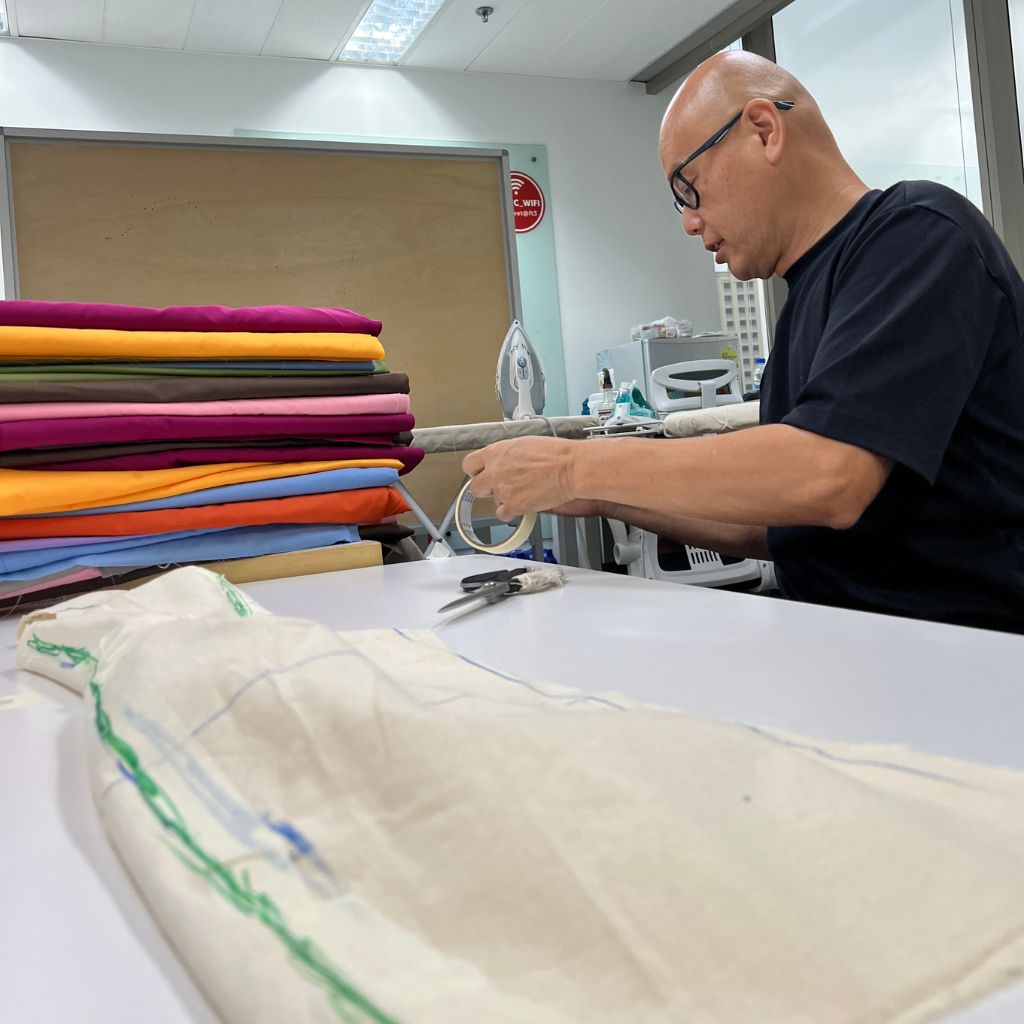
For fashion professionals seeking hands-on learning opportunities, Tembusu Institute is hosting two specialised masterclasses led by internationally renowned designer and educator Shingo Sato.
Creative Trousers Masterclass
This workshop explores advanced draping, silhouette development, volume manipulation, and transformational reconstruction techniques through trouser design.
Participants will gain practical experience creating innovative garment structures while strengthening their understanding of three-dimensional pattern development.
Key learning outcomes include:
- Advanced draping techniques
- Transformational reconstruction methods
- Creative trouser development
- Three-dimensional pattern translation
- Couture-inspired construction approaches
Learn more and register: Creative Trousers Masterclass
Please note that the Creative Trousers Masterclass is not eligible for SSG funding, SkillsFuture Credit, or UTAP claims.
Seamed Bamboo Bag Design
This masterclass introduces Shingo Sato’s distinctive approach to sculptural accessory design.
Participants will explore seam engineering, origami-inspired construction methods, and creative fabric transitions while developing a unique bamboo bag design.
Key learning outcomes include:
- Creative accessory construction
- Origami-inspired design techniques
- Innovative seam engineering
- Advanced fabric manipulation
- Three-dimensional form development
Learn more and register: Seamed Bamboo Bag Design
Please note that the Seamed Bamboo Bag Design workshop is not eligible for SSG funding, SkillsFuture Credit, or UTAP claims.
Both workshops are designed for:
- Fashion design students
- Professional pattern makers
- Fashion educators
- Haute couture designers
- Fashion entrepreneurs
- Creative practitioners seeking advanced technical skills
Why Study Advanced Fashion Techniques Now?
- Fashion is changing rapidly.
- AI can generate sketches.
- Software can automate patterns.
- But craftsmanship remains difficult to replicate.
- The designers who stand out are often those who combine technical mastery with creative originality.
- Transformational reconstruction strengthens both.
- It teaches you how to think differently.
- How to solve design problems creatively.
- How to turn fabric into something memorable.
- Those skills remain valuable regardless of how technology evolves.
Ready To Explore Transformational Reconstruction?
If you’ve ever looked at a garment and wondered how it was made, this is your opportunity to learn directly from one of the world’s most respected innovators in advanced draping and pattern transformation.
Whether you’re a student, educator, pattern maker, couture artisan, or fashion entrepreneur, Shingo Sato’s masterclasses offer practical techniques that can immediately influence your creative process.
Explore the workshop details, review the learning outcomes, and choose the masterclass that aligns with your creative goals.
Register for Upcoming Shingo Sato Masterclasses
- 1, 2, 3 August 2026
- 4, 5, 6 August 2026
9AM-6PM on the first two days | 9AM-1PM on the last day
- 3 August 2026, 2PM-6PM
- 6 August 2026, 2PM-6PM
Seats are limited and allocated on a first-come, first-served basis.
Frequently Asked Questions (FAQs)
Is Shingo Sato’s masterclasses suitable for beginners?
These masterclasses are best suited for individuals with foundational knowledge of garment construction, draping, or pattern making. Beginners with strong motivation may still benefit, but prior experience can help maximise learning outcomes.
What is the difference between moulage and pattern drafting?
Pattern drafting typically starts with measurements and flat patterns. Moulage begins directly on the dress form, allowing designers to shape and develop garments three-dimensionally before creating patterns.
How can transformational reconstruction improve my fashion design portfolio?
Transformational reconstruction helps designers create original silhouettes, innovative seam placements, and advanced garment structures that demonstrate creativity, technical ability, and design thinking – qualities valued by employers, fashion brands, and clients seeking distinctive design work.