
How TikTok is changing the way people shop online
TikTok has risen to prominence on social media in recent years and quickly established itself as a significant force in the business sector. When the platform was first introduced in 2016, it immediately captured the attention of younger audiences, especially Gen Z and Millennials, who are increasingly powerful buyers. This change in demographics has forced firms to reevaluate their conventional marketing approaches and adjust to a world where TikTok influences buying decisions in addition to providing entertainment.
One of TikTok’s distinctive features is short-form, captivating video content that captures viewers’ interest and promotes sharing. Brands may use this approach to create innovative marketing initiatives that connect with consumers on a personal level. By selecting content based on user preferences, the ‘For You Page’ algorithm improves user experience and helps marketers connect with their target audience more successfully. As a result, companies now see TikTok as an essential tool for product and service promotion in addition to being a social media platform.
Recent statistics indicate that TikTok’s e-commerce potential continues to grow, with a noticeable increase in sales attributable to viral trends and influencer partnerships. Many brands harness the platform’s capabilities to create authentic connections with consumers. Companies can tap into existing communities by collaborating with influencers who align with their brand values, fostering trust and loyalty.
According to recent data, TikTok’s e-commerce potential is still expanding, as seen by a discernible rise in revenues attributed to influencer collaborations and viral trends. Many firms use the platform’s features to establish genuine customer relationships. Businesses may reach existing communities and build trust and loyalty by working with influencers who share their brand values.
Why Analytics Matters in Retail
The retail sector’s ability to adjust and react to changing consumer needs is critical. The application of analytics is among the best strategies for achieving this flexibility. Retailers use data to inform their decision-making, improving their company plans. By examining consumer behaviour and preferences, retailers may develop customised experiences that connect more successfully with their audience.
Retailers can forecast future trends and desires by identifying patterns in customer purchasing through an understanding of analytics. For example, data-driven insights from social media sites like TikTok offer priceless insights about what appeals to target customers. Retailers may better meet consumer expectations by utilising this data to modify their product offerings, marketing plans, and advertising campaigns. This proactive strategy is especially crucial on sites like TikTok, where trends are ephemeral and subject to quick changes.
Furthermore, analytics are essential for more reasons than merely identifying patterns. It includes a thorough strategy for developing a devoted clientele. Using efficient data analysis, retailers can pinpoint customer segments, target marketing campaigns, and improve customer experience. Retailers can adjust their strategy in real-time based on actionable information by analysing KPIs like engagement or conversion rates from TikTok campaigns. Retailers prioritising analytics are therefore better able to develop a deeper understanding of their clientele, promoting increased engagement and pleasure.
In conclusion, analytics is essential to the retail industry and not just a helpful tool. By adopting a data-driven culture, retailers can remain competitive, innovate purposefully, and satisfy customers’ ever-evolving needs in the digital age.
Key Metrics to Track on TikTok
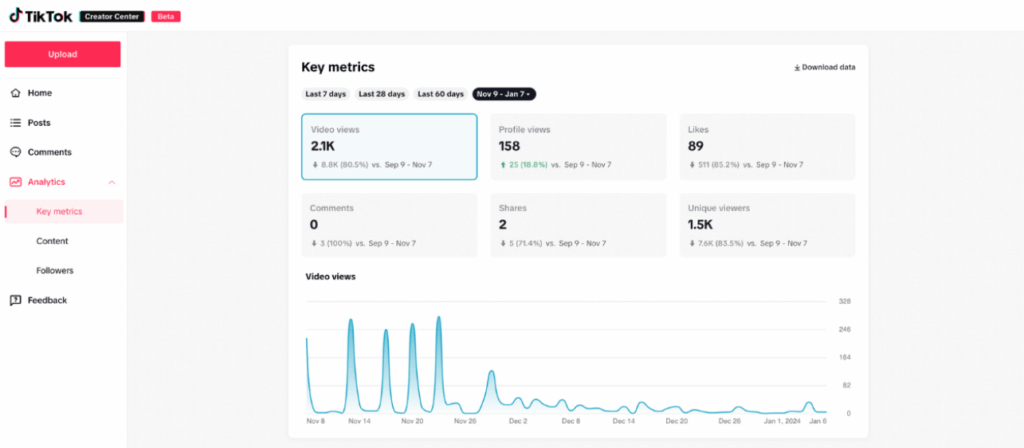
Comprehending TikTok statistics is essential for developing successful marketing strategies in the ever-changing retail industry. Retailers should concentrate on several key performance indicators (KPIs) to properly assess their TikTok performance. Engagement rates, follower growth, video views, and conversion metrics are the main metrics to monitor since they provide distinct perspectives on audience behaviour and the efficacy of campaigns.
Engagement rates, measured by likes, comments, and shares, are an essential indicator of how effectively material connects with viewers. A better engagement rate may result in increased consumer contact and brand loyalty, which shows that your audience considers your material interesting. Retailers can determine which subjects or formats produce the highest levels of engagement by examining the context of their posts. For example, adding trending challenges or user-generated material can increase visibility and encourage community interaction.
Another crucial indicator of a retailer’s profile’s popularity and reach is the growth of followers. Businesses can evaluate the success of their marketing campaigns by tracking the increase in their followers over time. While stasis or decline may call for a reassessment of strategy and content offerings, increasing followers may indicate successful content.
Video views are essential for comprehending content visibility. Retailers may determine the total reach of their films by monitoring the number of views. For example, a new product campaign might look at view counts to gauge initial interest. Additionally, it can assist in determining whether specific hashtags or posting times increase visibility.
Conversion indicators, such as click-through rates or TikTok sales, provide information about how well a campaign generates purchases. Retailers can evaluate the direct results of their social media efforts by connecting their TikTok content to e-commerce platforms and monitoring the corresponding sales statistics. The significance of these measures in promoting retail success is demonstrated by real-world instances, such as how brands have effectively used influencer partnerships on TikTok to increase their conversion rates. Retailers may improve their TikTok strategy and overall performance by concentrating on these crucial variables and making well-informed decisions.

Career Benefits of TikTok Proficiency
As the digital landscape changes, knowledge of platforms like TikTok is becoming increasingly important in retail.. Gaining expertise in TikTok analytics can have numerous positive effects on one’s career, especially as companies look to use creative social media tactics to reach younger audiences. TikTok’s dynamic nature highlights the need for experts to successfully navigate and evaluate trends, user behaviour, and engagement metrics. This ability improves current marketing and analytical skills in the retail industry and creates new work prospects.
Employers are actively looking for candidates adept in digital marketing, as evidenced by the surging demand for skills associated with social media platforms. Understanding TikTok’s algorithm and how to leverage its analytics enables individuals to create content that resonates with target demographics, thus enhancing a brand’s market presence. Professionals proficient in these areas, ranging from social media managers to digital marketing specialists, can expect ample job opportunities.
Earning certifications like the SCTP Advanced Certificate in Digital Retail can show dedication to mastering digital channels and further strengthen one’s knowledge. These certifications offer a competitive advantage in a competitive labour market and validate abilities. Additionally, incorporating TikTok analytics knowledge into one’s professional portfolio demonstrates flexibility and vision, highly prized in the retail industry because of the speed at which technology is developing.
In conclusion, becoming proficient in TikTok analytics can significantly improve job opportunities in the retail sector. By taking advantage of the increased emphasis on digital marketing abilities and earning the necessary certifications, people can set themselves apart and position themselves for future success in a more competitive environment.